
Organisation identity
Each organisation has one profile that represents it on the platform and can be reused with every buyer that uses nodeStream, instead of filling in a new form for each one.

nodeStream, a product of Data People Connected
nodeStream connects organisational profiles, supplier evidence and shared workflows while each participant retains control of its data. The platform is implementation-ready for trial programmes. It is built on Buttress, our open-source data controller.
The problem
Cornwall Council and Dorset Council each report over 6,000 suppliers, and Wye Valley NHS Trust over 4,000 a year. Range from DPC's nodeStream briefing, June 2026.
A city council, a hospital trust or a large enterprise can have between 3,000 and 8,000 suppliers. Their credentials, compliance and ESG claims are usually checked by hand, from PDFs, spreadsheets and phone calls. At that scale the checking cannot keep up.
Manual checks make it difficult to keep supplier information current and understand risks beyond direct suppliers. nodeStream trials will test how shared profiles and workflows can improve visibility and reduce repeated administration.
The context: buyers work within the Procurement Act 2023, the Modern Slavery Act, the Social Value Act and net zero commitments, and the EU Cyber Resilience Act applies to products with digital elements.
The platform
Each organisation has one profile that represents it on the platform and can be reused with every buyer that uses nodeStream, instead of filling in a new form for each one.
Workflows run across organisations, started by an event or a person and broken into tasks. Shared workflows give authorised participants access to a consistent record and can reduce duplicate entry and email follow-up.
Access is granted for a job and closed when the job is done. Policy-based access control means people see only the data they need, for the time they need it.
Data is shared through federation rather than copied into one central store, so each organisation decides who can see its data and how it is used.
nodeStream is designed to give each supplier a green, amber or red status. Supplier status indicates how submitted evidence meets the buyer's configured requirements; it is not a blanket certification of legal compliance.
Built on open-source foundations, including the Buttress data controller, nodeStream is designed to support interoperability and reduce dependence on a single supplier.
Interface concepts
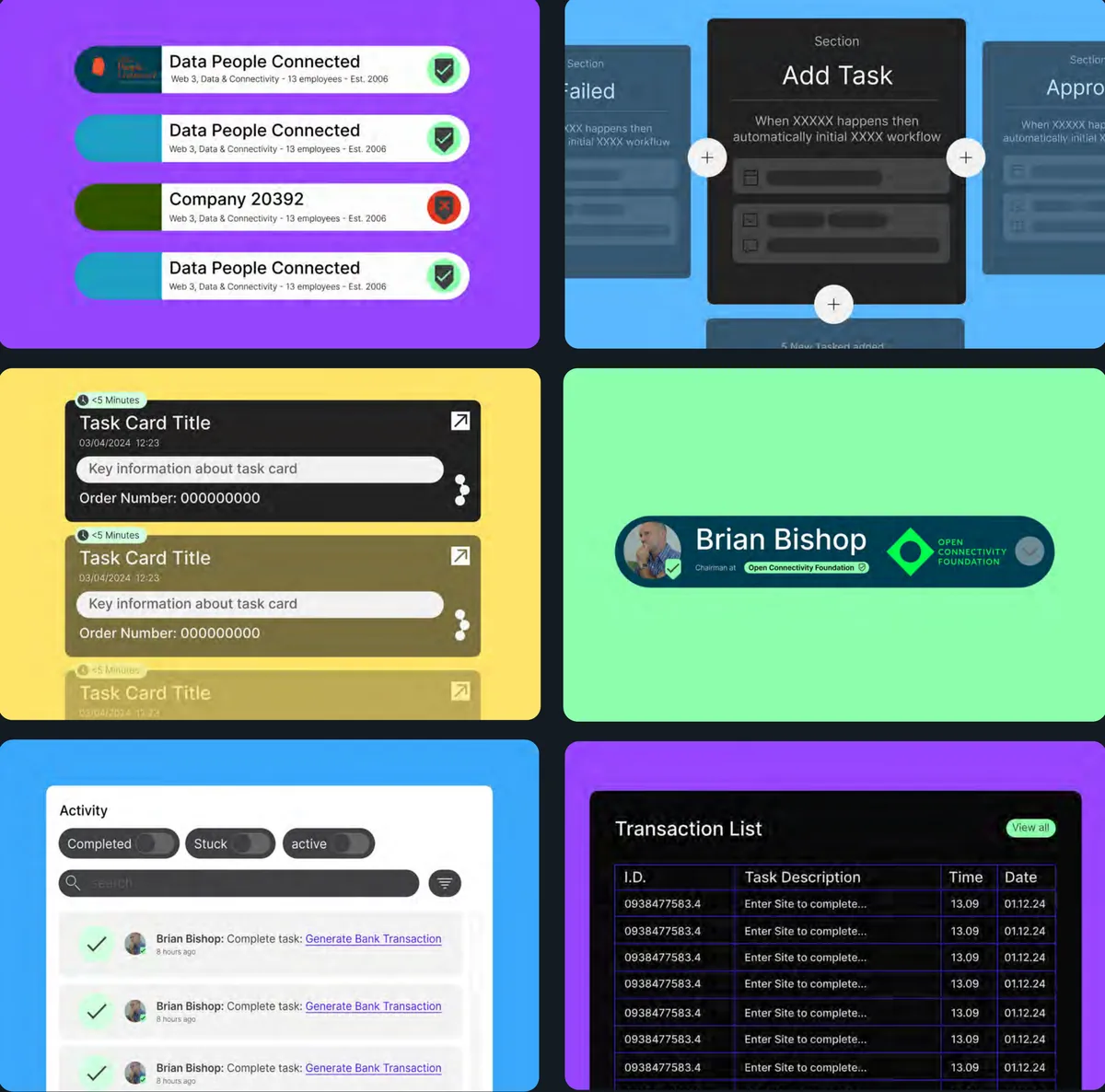
nodeStream's interface designs show each organisation as a single profile with a conformance status, shared work broken into task cards, and an activity record of who completed what and when.
How it works
The model nodeStream is designed around.
A trial begins with agreed supplier requirements and an onboarding process appropriate to the buyer's procurement arrangements.
Suppliers create a reusable profile; trial results will establish onboarding time and the amount of manual input required.
Rules are designed to flag changes that matter to the buyer, such as a change of director or a missed filing.
Each supplier carries a conformance status, and decisions are kept in an audit trail for procurement and compliance reporting.
The same model can extend down the chain: a direct supplier can ask its own suppliers to join.
Status
nodeStream is implementation-ready for scoped trials. Each programme will define the workflows, integrations, access policies and measures of success to be tested. Contact us to discuss the configuration for your organisation.
Our roadmap includes these aims:
Explore supplier onboarding and a shared workflow, then discuss a trial against your organisation's requirements.