







A maritime city waterfront at dusk with fine teal lines of light linking buildings and the port

Investment opportunity 2026

We connect communities with their data. Securely and in real time.

For more than a decade, Data People Connected has developed open infrastructure that enables communities, enterprises and their suppliers to share data securely while continuing to use their existing systems. Our platforms are now implementation-ready for trial programmes. We are seeking approximately £5 million to support our go-to-market strategy: delivering trials, converting successful programmes into commercial services, and building the team and delivery capacity needed for planned growth.

  • Trial-readyImplementation-ready for trial programmes
  • £750kin Innovate UK funding
  • Project Qin live commercial use
  • £5mSeeking approximately £5 million for market entry and growth

The problem

Data is stuck in separate systems

Councils, hospital trusts and large enterprises often hold data in separate systems. Sharing it across departments and suppliers can require manual work, duplicate records and complex access arrangements.

We reviewed earlier smart city strategies, our own included, with a panel of experts. The same causes kept coming up:

  • Technology bought before the data foundations were in place.
  • No common data models and no common security framework.
  • Lock-in to single suppliers, and data lakes that build up data debt.
Thousandsof suppliers

Large public bodies and enterprises can work with thousands of suppliers. Their credentials and compliance are usually checked by hand. Cornwall Council reports over 6,000 suppliers (Cornwall Council procurement). Dorset Council reports over 6,000 a year (Dorset Council, doing business with us). Wye Valley NHS Trust reports over 4,000 a year (Wye Valley NHS Trust business partners).

Pioneers of the Trust Economy, 1 min 48 s.

Who it is for

The people at each end of the data

Every system we connect has a person behind it: someone who needs the data to do their job, or who the data belongs to.

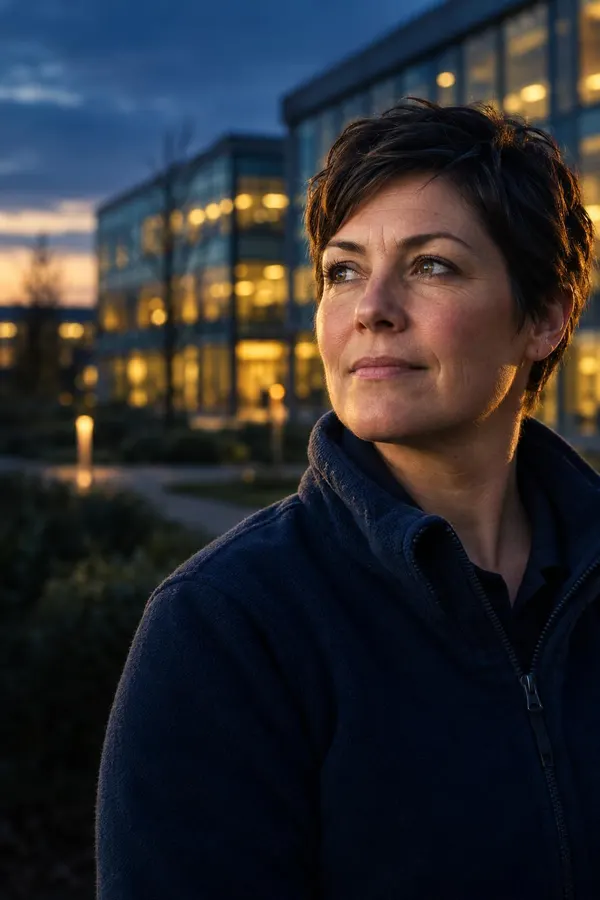
  • Close portrait of an estates manager in a work fleece, a lit university building behind her at dusk

    Estates teams

    Bring building data together to support maintenance, energy management and occupant comfort.

  • Close portrait of an older man in his kitchen in the evening, looking out of the window

    Housing providers

    Connect home and energy data to support more responsive services.

  • Close portrait of a woman who runs a small manufacturing business, her stockroom behind her

    Suppliers

    Reuse organisational information and share evidence against buyer requirements.

  • Close portrait of a council officer on a city street at blue hour

    Council teams

    Share authorised data across departments to support decisions and services.

  • Close portrait of a wind energy engineer in a high-visibility jacket, turbines on the horizon at dusk

    Energy operators

    Connect operational data across assets and systems.

What we have built

A digital spine that connects systems without replacing them

Open-source infrastructure underneath, a commercial platform on top, and applications that reuse the same foundation.

ApplicationsProject Q and others

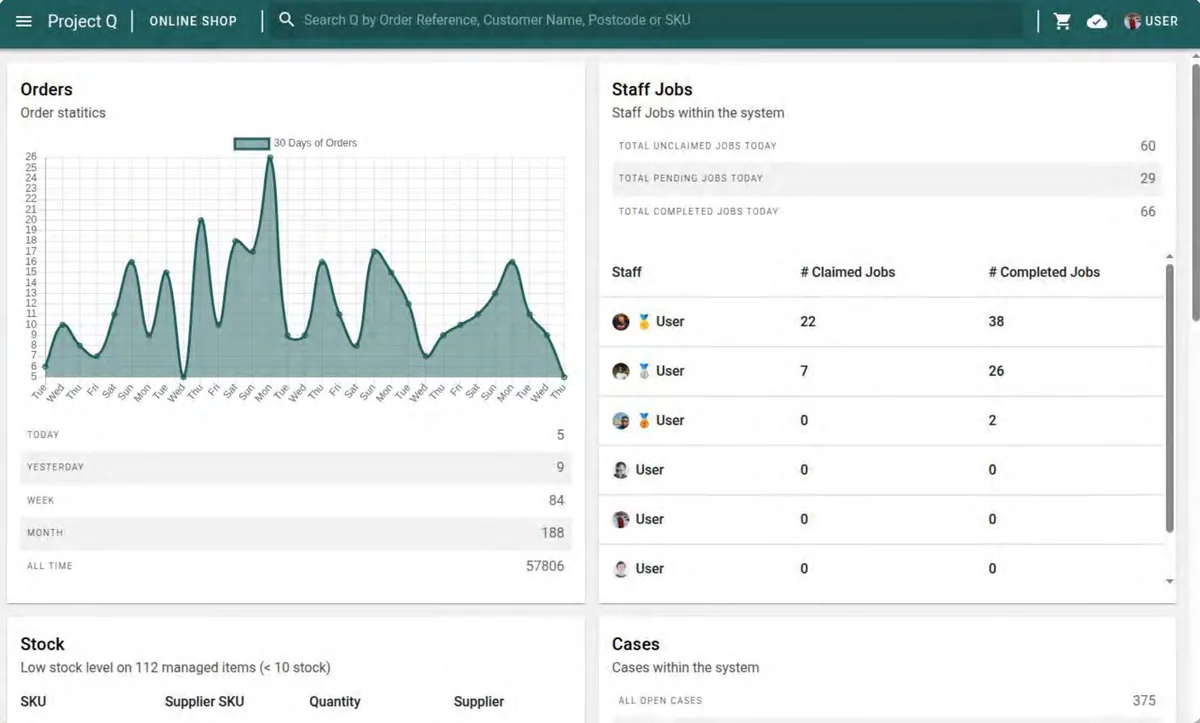
Built on the spine. Project Q, an order, stock and customer system, is in live use and earning income.

Commercial platformnodeStream

Runs workflows between organisations and is designed to validate the suppliers in a buyer's chain. Each party keeps control of its own data.

Open source coreButtress

Buttress is the open-source data access layer between applications and databases. It checks requests against access policies before releasing data. Published under AGPL-3.0.

Connects toYour existing systems
DatabasesConnected devicesLegacy systemsPartners' data
Project Q dashboard showing 30 days of orders, staff jobs, stock levels and open cases
Project Q, an application built on Buttress, showing 30 days of orders, staff jobs, stock levels and open cases. Source: our investment deck.

Traction and credibility

At the table where data standards are set

Our experience spans data standards, public policy and applied projects.

  • StandardsOpen Connectivity FoundationCEO Brian Bishop is a former President of the IoT standards body.
  • InternationalUnited NationsWe are on the UN roster of smart city consultants.
  • GovernmentUK GovernmentSpecial advisers on the National Cyber Physical Infrastructure strategy.
  • Digital twinsDigital Twin HubCEO sits on its National Working Group on data sharing architectures.
  • InteroperabilityOpen & Agile Smart CitiesMoU signed. CEO sits on the MIMs working groups 3, 6 and 8.
  • Smart citiesITU and U4SSCCEO contributes to thematic groups 7 and 9.
  • ResearchUKRICEO is on the UKRI panel of experts for smart cities.
  • FundingInnovate UK£750,000 of Innovate UK funding, alongside more than £700,000 from the founder, family and friends.
  • AcceleratorACCEND Scaleup 2026One of 28 companies selected across Europe for the Smart Cities cohort of the Horizon Europe-funded accelerator.
  • Partnerships3 MoUsSigned with the Irish Sea Rim, Open & Agile Smart Cities and ITS University, Surabaya.
A container port at dusk with an offshore wind farm on the horizon, linked by faint lines of light
Selected projects

Energy and infrastructure

  • Wind farm data connection. In an Innovate UK feasibility study, a chip built to OCF standards was fitted in a working wind turbine to give operators a secure, real-time data stream.
  • Energy smart metering. Following an Innovate UK feasibility study completed in February 2025, we are developing a smart home gateway; phase one tested Buttress and nodeStream as the data sharing layer.
  • Liverpool City Region energy demonstrator. With Pulse Systems and Dynamic Devices, planned for the Central Tech Building.

A university campus at dusk seen from above, with faint teal lines linking the roofs of its buildings
Selected projects

Buildings, cities and partners abroad

  • Liverpool John Moores University. A live dashboard for the estates team bringing together lift, lighting and other building system data across the campus.
  • UK and South Korea. Secure sharing of energy data across homes, businesses and cities, tested with housing providers and energy retailers.
  • Liverpool and Surabaya. A cross-city digital twin exploration with UK and Indonesian partners, leading to a memorandum of understanding with ITS University.
  • Project Q. An order, stock and customer system on Buttress, in live use and earning income.
All projects

Market

Our initial market

Our initial market is organisations that need to manage supplier information and share data across complex networks. We start with an anchor organisation and expand through its suppliers and partners.

Business model

Start with an anchor and grow through its network

We start with a focused deployment for an anchor organisation, such as a council, a manufacturer or a trading network. A focused deployment creates a route to the anchor's suppliers and partners. Wider adoption depends on commercial agreements, onboarding and demonstrated value. Each organisation that joins pays a recurring licence.

  1. 1anchor organisation starts with a focused deployment
  2. Tier 1suppliers can be invited by the anchor to join, each on a licence
  3. Tier 2their own suppliers can join in turn, and other organisations can buy a licence directly
  4. 15%of eligible network licence fees returns to the anchor as platform credit for DPC development services

DPC, Investment opportunity overview, October 2026, sections 7 and 10.

Three revenue streams

  • Participant licences. A recurring fee from every nodeStream participant, tiered so that small businesses can afford it. In our UK model the average is about £396 a year.
  • Usage and transaction fees. Once workflows are running, participants pay by transaction volume and complexity, including verification where it applies.
  • Deployment services. New regional networks and data spaces pay up-front fees for set-up, onboarding and integration. Participants keep ownership of their data.

Anchor incentive

Anchors receive platform credit equal to 15% of eligible network licence fees, redeemable against DPC development services such as integrations, workflows and local digital twins. The credit is an incentive, not a revenue stream, and cannot be taken as cash.

Proving it first

Our first deployments will test customer benefits, pricing, anchor credits and delivery margins before we expand. Reusable software modules and trained delivery partners are meant to make each later deployment cheaper than the last.

See our illustrative projections

Roadmap

From proven components to commercial scale

  1. Q1 2019

    Buttress build begins

    Development of the open-source core.

  2. January 2022

    Buttress goes live

    Followed by a continuing cycle of improvement.

  3. Q2 2024

    nodeStream build begins

    The commercial platform, built on Buttress.

  4. Now

    Implementation-ready for trial programmes

    Our platforms are implementation-ready for trial programmes.

Investment supports these stages alongside continued platform development and security assurance.

Enhancement roadmap

Planned platform enhancements, alongside the trial programme:

  • Rust. Buttress moves to Rust, compatible with the current version, with tested policy and federation engines and a security audit.
  • Model management. Shared data models managed in one place, with data standards brought in directly.
  • Federation. Separate Buttress deployments share data with each other under agreed policies.
  • AI workflows. nodeStream workflows, data and access policies set up from a plain-language description.

2019 to 2024 from DPC's development roadmap (investment deck, page 20). Enhancement roadmap from DPC's roadmap requirements, October 2026. Trial and conversion targets from DPC's investment overview, October 2026; the 2027 dates are proposed targets.

Use of funds

What the money is for

£750,000 of Innovate UK funding and more than £700,000 from the founder, family and friends built the technical foundations. The approximately £5 million we are seeking, invested in Data People Connected Ltd, would fund about 30 months of the core programme from 2027, with the team growing from 12 people in the first year to 22 in the second:

  • Delivering trial programmes and converting successful trials into paid deployments.
  • Building delivery capacity to launch services, deliver deployments and support customers.
  • Continued platform development and security assurance for Buttress and nodeStream.
  • AI-assisted engineering to develop, test and integrate the platforms faster.
  • Market entry in other territories, such as Europe and South East Asia, would be funded separately through licensed territory companies.

DPC, Investment opportunity overview, October 2026, sections 3, 6 and 12.

The investment

Seeking approximately£5m

Seeking approximately £5 million to deliver trial programmes, support commercial conversion and build delivery capacity. We welcome discussion on size, structure and terms. View our investment plan, milestones and illustrative financial scenarios.

Team

A small specialist team, ten years into the problem

Supported by consultant advisers in cyber security, critical infrastructure, health data and the National Digital Twin Programme.

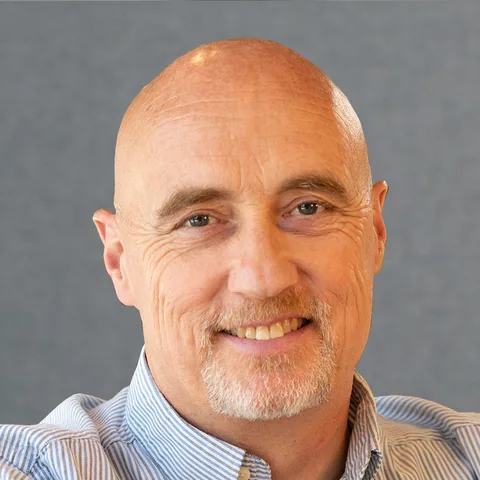
  • Brian Bishop

    Brian Bishop

    Founder & Chief Executive Officer

  • Christopher Bates-Keegan

    Christopher Bates-Keegan

    Chief Technology Officer

  • Fergus Kendall

    Fergus Kendall

    Chief Innovation Officer

  • Nick Paterson-Jones

    Nick Paterson-Jones

    Head of Communications & Strategy

  • Tom Cahill

    Tom Cahill

    Lead Software Engineer

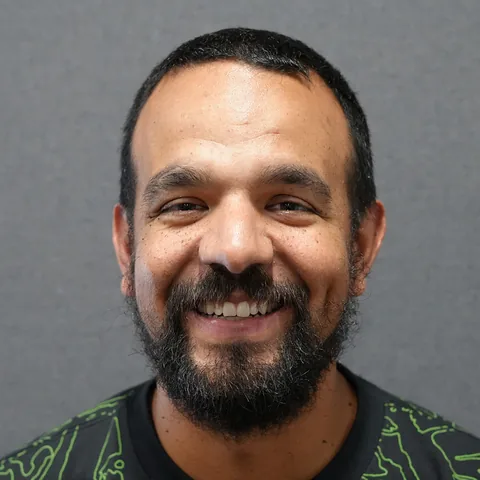
  • Mahmoud Abousereaa

    Mahmoud Abousereaa

    Lead Software Engineer

  • Chris Mason

    Chris Mason

    Lead Designer